
A primary focus at United Way of Greater Atlanta is to ensure that people have access to primary health care. We also strive to reduce unnecessary emergency room visits. Accomplishing these goals decreases medical costs assumed by community hospitals and taxpayers.
Studies show that waiting to seek care only when a condition becomes an emergency often leads to an extended hospital stay, which is the most expensive way for an uninsured person to receive care.
SOBERING STATISTICS
- More than 794,000 people in the Atlanta region do not have health insurance, of which 144,000 are children.
- Georgia ranks 36th in the nation in health care access.
- The use of emergency rooms as a safety net increases the total medical bill to metro Atlantans by $830 million each year.
- Most uninsured Atlantans live at or below the poverty level.
FINDING SOLUTIONS
Along with its partners, United Way is addressing the issue of health care access with a variety of strategies, including free clinics, mobile health units and reducing emergency room visits.
RESULTS
Statistics show that when a person is connected to a medical home, the person’s health improves. In a study of diabetics who tended to use the emergency room to manage their disease, there was an 80 percent reduction in use of the ER when patients were connected to a medical home. United Way’s Hospital to Home program for homeless people has reduced the use of the ER by those seeking repeated health access by 72 percent.
For just $2.4 million in primary health care funds and during just one year:
- 24,901 people accessed primary care services.
- 15,039 people were able to continue living in their own homes.
- 6,512 participants successfully completed substance abuse or mental health treatment.
- 4,145 people improved their daily activities.
HOW DO WE GET THERE?
How do we get there?
A United Way investment of $4.5 million over the next three years will give more than 600,000 people access to quality health care and cut uncompensated health costs by reducing unnecessary emergency department visits.
A United Way investment of $4.5 million over the next three years will give more than 600,000 people access to quality health care and cut uncompensated health costs by reducing unnecessary emergency department visits.
FREE CLINICS
Georgia has a network of 100 free and reduced-fee clinics that serve patients at one-thirtieth the average cost of a trip to the emergency room. According the Georgia Charitable Care network the clinics in Georgia served 183,625 patients in 2012, with 463,927 patient encounters. Clinics have seen demand increase about 21% over the last year. In addition, it is estimated that for every $1 that is invested in a charitable clinic, $7 worth of services are provided.
The free and reduced-fee clinics are run by volunteer physicians, dentists and nurses. United Way believes that the best and most efficient way to increase health care for poor families in the Atlanta region is to invest in additional capacity in the existing free and reduced-fee clinics we already have. The clinics need additional support personnel, modern equipment and nursing supplies.
United Way has found that funds directed to the Atlanta area free and fee-reduced clinics will generate new patients at a cost of less than $35 per patient. A visit to the emergency room costs an average of $1,500. For free and fee-reduced clinics, the benefit-to-cost ratio is 30-to-1.
United Way secured an AmeriCorps grant and deployed AmeriCorps members to free health clinics throughout the 13 counties to assist doctors, nurses and dentists. The volunteers also help secure SSDI and veterans’ benefits for eligible patients.
HEALTH ON THE MOVE
In 2009, Butts County did not have any safety net resources for its uninsured residents. The entire county has only seven physicians, including one pediatrician and no obstetrics services. Compounding the lack of resources was an absence of public transportation. The Butts County Health Council, led by the Butts County Life Enrichment Team, decided to take action. The community utilized funds a partnership between United Way and Kaiser Permanente to assist the uninsured in receiving healthcare, lab work and medications. The Council quickly learned in the manner of weeks that the need would surpass the funds they had to spend on this initiative.
In 2011, the Butts County Health Council decided to partner with Southside Medical Center to bring their state of the art mobile unit to Jackson to provide primary care, women’s services and dental care to the residents. The project began with a small investment of $20,000 and has been able to leverage over $400,000 since 2011 to keep the unit in place and begin planning for a stand-alone site center for the residents in the county. Building on this success, United Way has expanded its support of mobile health with a partnership in the College Park community and West End Medical Center.
COMMUNITY HEALTH WORKERS
There are more than 300,000 preventable emergency department (ED) visits in Greater Atlanta each year. The vast majority come from DeKalb and Fulton counties. At an average cost of $1,500 per visit, this adds up to about $450 million in excess health care costs.
United Way seeks to improve the health status of low-income and uninsured Atlanta residents through reduction in unnecessary ED visits, increased usage of medical homes and improvements in service delivery.
Frequent users of emergency departments represent a small group of both insured and uninsured people — vulnerable patients accounting for a disproportionately high number of ED visits and medical care costs. Patients who use the ED in place of a medical home often have health insurance but tend to be in poorer health overall. Criteria include:
- Using the ED five or more times within the past 12 months
- Being between 18 and 64 years of age
- Having a chronic disease, such as congestive heart failure, hypertension, diabetes, asthma and respiratory illness
United Way is deploying trained community health workers (CHWs) to do home visits and provide case management services for ED frequent users identified by Grady Health System. Building on the patient navigator work in place at Grady’s walk-in clinic, CHWs will perform home visitation, provide case management and work in partnership with Grady navigators to change the culture of ED use among the target population. In addition, the CHWs will provide valuable insight and data into behaviors to inform future interventions. This model will be valuable in reducing unnecessary ED visits, managing patients’ chronic conditions and establishing medical homes for people who do not have them.

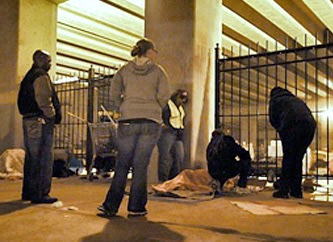


 With a down economy, the face of homelessness is changing. Finishing high school, graduating college, serving in the military and a 20-year career did not save Julia Kelly from being homeless. Without a job and a limited severance package, Kelly could no longer pay her rent and resorted to living with friends. That’s when she learned about Vets Connect. Vets Connect introduced her to Another Chance, which helped her with housing and the Gateway Center which gave her clothes, food and even employment training resources. “The program gave me some hope and dignity in what I was going through.” she says. Now Kelly lives in her own apartment and is going to school at Beulah Heights University for religious studies. She volunteers at her church working with women and is on the Peers Reaching Out (PRO) Team working to help other homeless individuals get off the streets. “Now I feel peaceful and settled,” she says, “I’m glad I never lost hope.” For more information on Vets Connect,